Pacemaker Doctor is a trusted initiative dedicated to advanced heart rhythm care, providing expert guidance, treatment, and support for patients with cardiac device needs.
Pacemaker Doctor is a trusted initiative dedicated to advanced heart rhythm care, providing expert guidance, treatment, and support for patients with cardiac device needs.
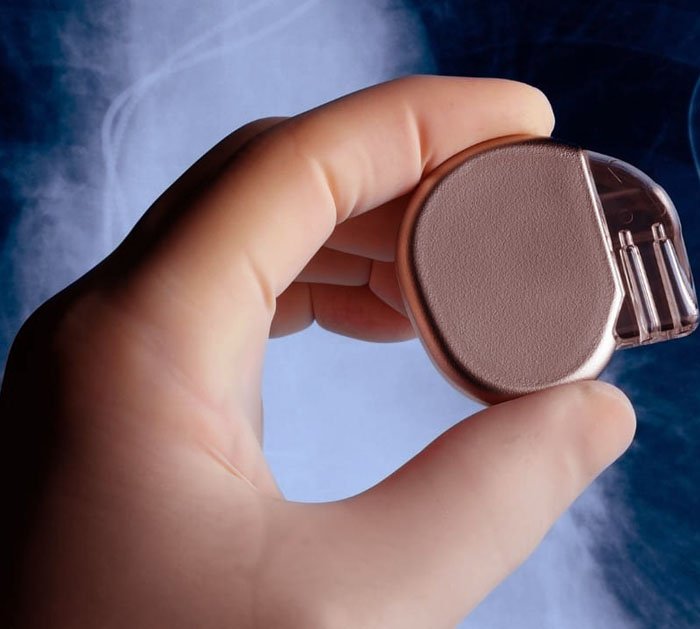
A pacemaker is a small battery-operated device that’s placed (implanted) in your chest under the skin to control your heartbeat. Average pacemakers weigh as little as 1 ounce (28 grams) and size as of matchbox.
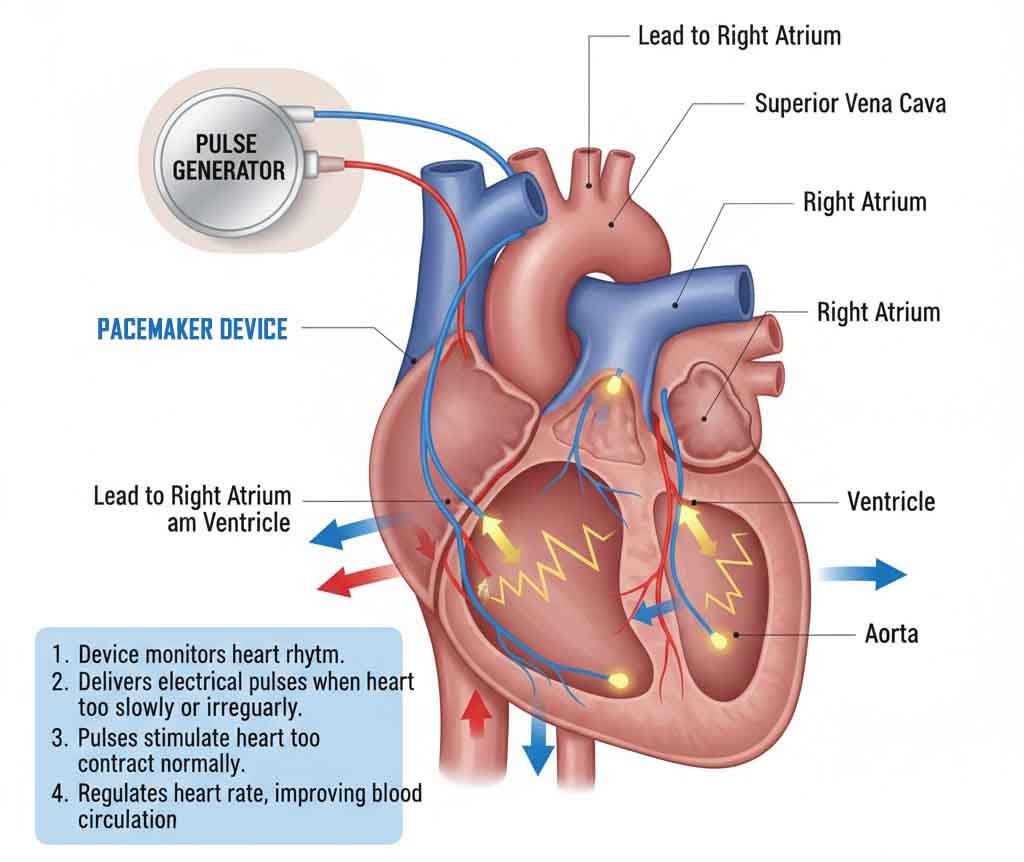
The generator contains the battery and the information to control the heartbeat. One to three leads (wires) that deliver electrical signals from pulse generator to your heart.
Depending on your condition, you might need one of the following types of pacemakers.
Electrical impulses are sent by the pacemaker device to tell your heart to contract and produce a heartbeat. Most pacemakers work just when they’re needed – on demand. Some pacemakers send out impulses all of the time
Your doctor will talk to you about which type of pacemaker is most suitable for you, which will depend on the reasons why you need to have one.
You need a pacemaker if your heart is pumping too quickly or slowly (heart block ). In either case, your body doesn’t get enough blood. This can cause:
Implanting a pacemaker typically takes one to two hours. You’ll receive a local anaesthesia to numb the incision site. You’ll be awake and talking during the procedure.
Your cardiologist will make a small incision below the collar bone. They’ll guide a small wire through the incision into a major vein near your collarbone. Then the cardiologist will lead the wire / lead through vein to your heart. An X-ray machine / Fluoroscopy will help guide your cardiologist through the process.
Using the wire (lead), cardiologist will attach an electrode to your heart’s right ventricle and another in right atrium. The other end of the wires (Leads) attaches to a pulse generator. This contains the battery and electrical circuits.
If you’re getting a biventricular pacemaker, your cardiologist will attach a third lead to the left ventricle. At the end, your cardiologist will close your incision with stitches.
Every medical procedure has some risks. Most risks associated with a pacemaker are from the surgical installation. They include:
Most complications are temporary. Life-altering complications are rare.