Pacemaker Doctor is a trusted initiative dedicated to advanced heart rhythm care, providing expert guidance, treatment, and support for patients with cardiac device needs.
Pacemaker Doctor is a trusted initiative dedicated to advanced heart rhythm care, providing expert guidance, treatment, and support for patients with cardiac device needs.
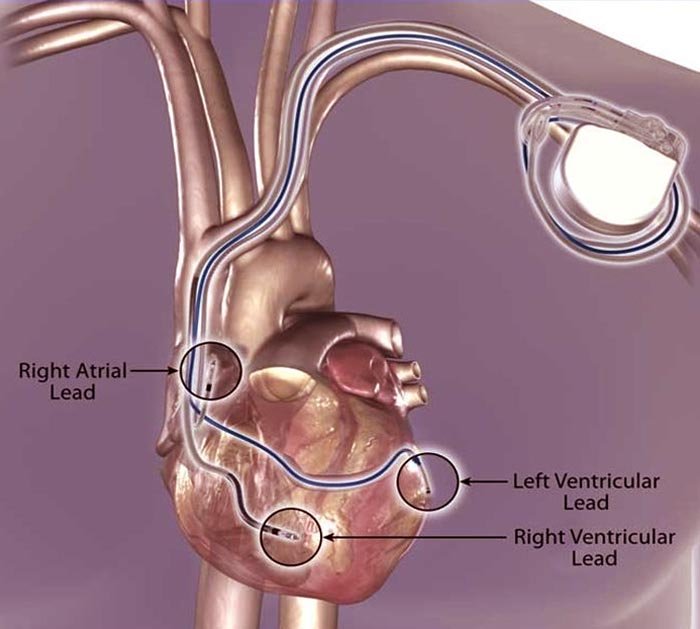
Cardiac Resynchronization Therapy (CRT), also known as a Biventricular Pacemaker, is an advanced heart failure treatment that helps the heart’s chambers beat in a more coordinated and efficient way. It is used for patients whose heart’s electrical system causes the left and right ventricles to contract out of sync, leading to poor pumping efficiency and worsening heart failure symptoms.
CRT can significantly improve heart function, reduce hospitalizations, and enhance quality of life in selected heart failure patients.
CRT is recommended for patients who have:
CRT implantation is usually done under local anesthesia and light sedation:
Patients are typically discharged within 48-72 hours and can resume daily activities after recovery.
Although generally safe, some potential risks include:
CRT-D (Cardiac Resynchronization Therapy with Defibrillator) is an advanced heart device that combines two important functions — Cardiac Resynchronization Therapy (CRT) and an Implantable Cardioverter Defibrillator (ICD) — in a single unit.
Just like a CRT device, it helps both ventricles of the heart beat in a synchronized manner, improving heart function and relieving symptoms of heart failure. But in addition to that, the CRT-D can also detect and correct life-threatening arrhythmias (abnormal heart rhythms) by delivering an electric shock — just like a defibrillator — to prevent sudden cardiac death.