Leadless Pacemaker in Delhi
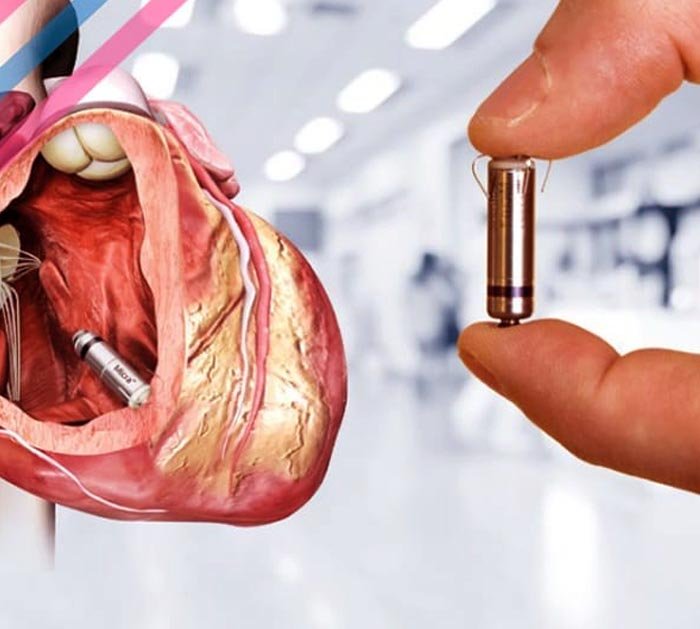
A Leadless Pacemaker is the latest advancement in cardiac pacing technology designed to treat slow heart rhythms (bradycardia). Unlike traditional
pacemakers, it is a miniature, self-contained device placed directly inside the heart — without any wires (leads) or surgical pocket. This reduces
complications and offers a more comfortable and durable solution for patients requiring pacing support.
Who is the Ideal Patient For Leadless Pacemaker ?
Leadless pacemakers are recommended for patients who:
- Have symptomatic bradycardia or heart block.
- Have infection or blockage of veins that make traditional pacemaker placement difficult.
- Have previous pacemaker infection or lead-related complications.
- Need a minimally invasive pacing option with fewer long-term issues.
How Leadless Pacemaker is Implanted?
The procedure is minimally invasive and typically done under local anesthesia with light sedation.
- 1. The cardiologist inserts a thin tube (catheter) through a vein in the groin.
- 2. The leadless pacemaker — smaller than a vitamin capsule — is advanced to the heart’s right
ventricle.
- 3. It is then attached to the heart wall and begins functioning immediately.
- 4. The entire procedure usually takes less than one hour, and most patients are discharged
the next day.
What Are The Advantages of Leadless Pacemaker ?
- No leads or surgical pocket, eliminating common pacemaker-related complications.
- Smaller in size – about one-tenth the size of a traditional pacemaker.
- Reduced risk of infection and lead dislodgement.
- Faster recovery time and minimal scarring.
- Long battery life (10–12 years on average).
- MRI-compatible and suitable for most daily activities.
Possible Complications
Though rare, some possible complications include:
- Vascular injury or bleeding at the groin insertion site.
- Device dislodgement or repositioning requirement.
- Cardiac perforation (rare).
- Infection (extremely uncommon).
- Difficulty in device retrieval if replacement is needed later.
Regular follow-up and remote monitoring help ensure optimal performance and patient safety.